Slides — Chemistry Lecture Decks from a Prompt
Build a chemistry lecture deck from a prompt, or start from the PowerPoint you already have. Accurate structures, mechanisms, and teaching figures, exported as editable PPTX.
Slides for chemistry teaching
Tomorrow's lecture, drawn correctly.
For instructors, TAs, SI leaders and tutors: animated mechanisms, NMR you can take apart, and editable slide decks with every structure drawn correctly.
Chemistry-accurate structures
NMR spectra and energy diagrams on request
Editable PPTX, yours to keep
Teach the hard parts: mechanisms and NMR
Two tools to use in class, in office hours, or alongside your slides.
Mechanism Lab

Have an AI agent propose each step, with chemistry checks on every arrow. Or push the curved arrows yourself, press Play, and assign the mechanism as graded homework.
Open Mechanism Lab →NMR interpretation
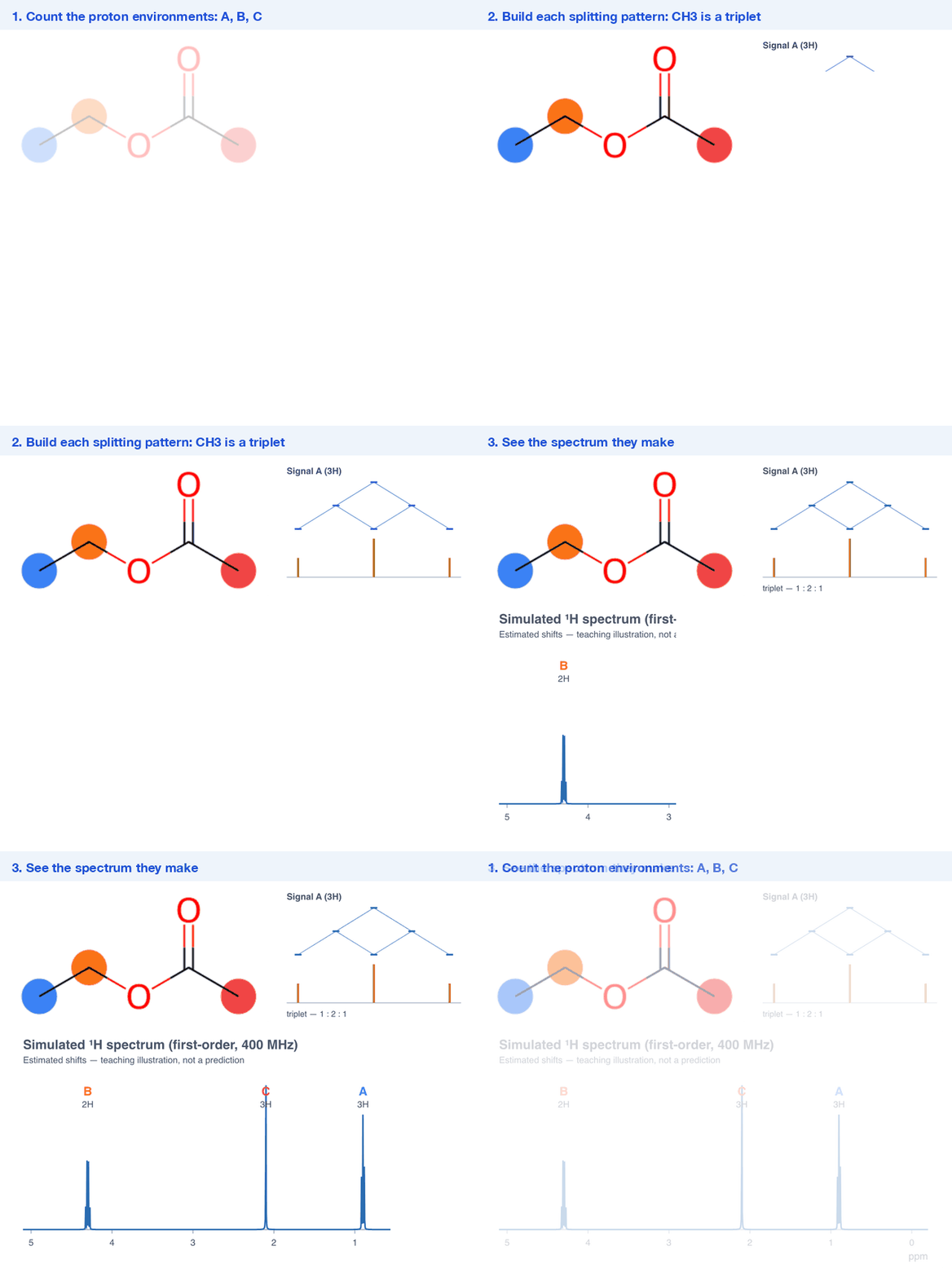
Signal counts, splitting trees and real TopSpin spectra, so students connect each peak to the protons that make it.
What do you need to teach this week?
Slides fits how each of you teaches. Open this page on a laptop to build a deck.
Instructors
A lecture or exam review with teacher notes, plus an optional deep-dive background deck for your own prep.
TAs & recitation leaders
Worked problems and discussion questions sized for a 50-minute section.
SI leaders & tutors
Step-by-step study decks students can flip through before the exam, with practice prompts.
Building slides needs a bigger canvas
The prompt, your pinned structures, and the deck taking shape are meant to be read side by side. Open this page on a laptop to build it.
Read the organic textbookWhat a finished deck looks like
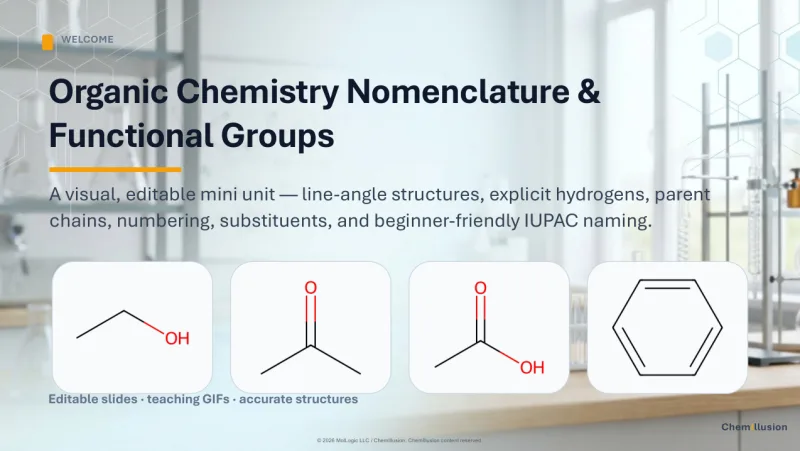
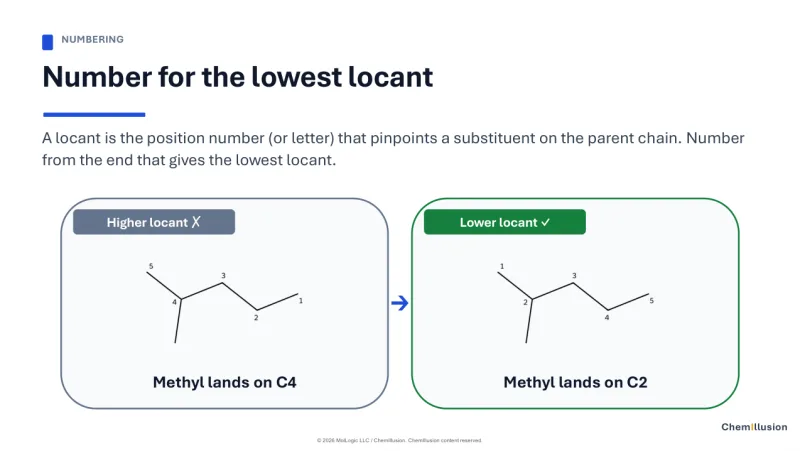
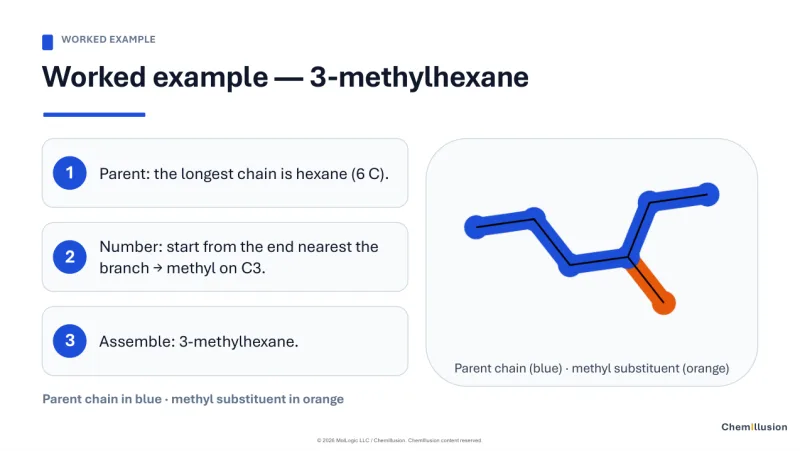
Three of 51 slides from a sample nomenclature unit. Every structure is drawn by RDKit, and every slide stays editable in PowerPoint.
More for your course
Instructor's Aide
A second reader for the decks you build here. Review any slide for chemistry accuracy, clarity and accessibility, and see the teaching strengths worth keeping as well as the problems. Full-deck, learning-objective and rehearsal reviews are coming.
Uses AI Actions — 1 for a selected-slide review, 5 for a full-deck, alignment, or rehearsal review. Included with Premium and Professional subscriptions and administrator accounts. The one-time 2,000-slide Course Prep package includes deck creation and export but does not include Instructor's Aide.